★★★★★
★★★★★
Verified Buyer
The quality is TOP! Will buy again.
Uso del prodotto: Questo prodotto è destinato esclusivamente alla ricerca.
Tutte le informazioni sui prodotti presenti su questo sito hanno scopo esclusivamente educativo. Qualsiasi forma di introduzione nel corpo di esseri umani o animali è severamente vietata dalla legge. Questo prodotto deve essere maneggiato solo da professionisti abilitati e qualificati. Non è un farmaco, un alimento o un cosmetico e non deve essere etichettato, utilizzato o presentato come tale.
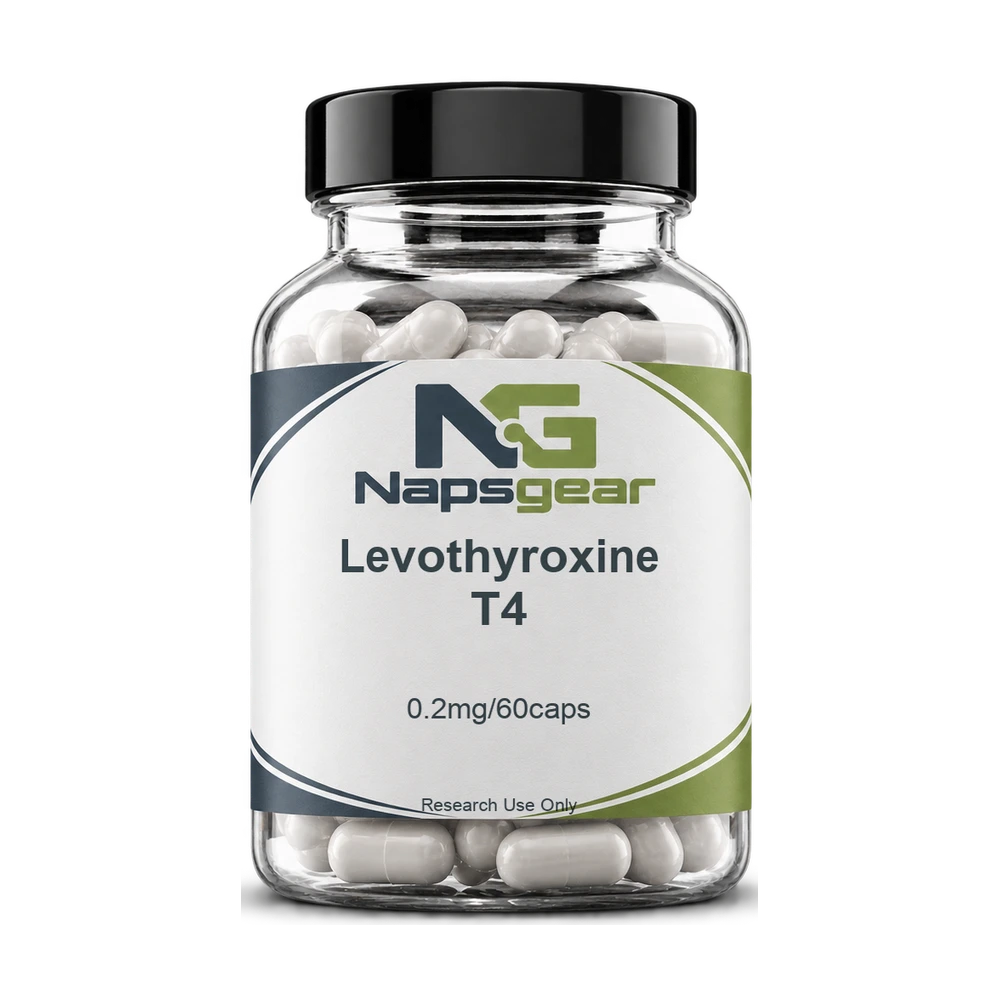
Levothyroxine (L-thyroxine, T4) is an iodinated amino acid derivative utilized as a reference compound in studies of thyroid hormone biochemistry, metabolism, and signaling.
Durante il cambio di confezione potresti ricevere prodotti con l’etichetta precedente o con quella nuova. Formulazione, purezza e qualità restano esattamente le stesse, secondo i nostri standard.
-25% su tutto – fino al 31 Ottobre
25% sui prezzi ordinari, in sostituzione degli altri saldi. Cumulabile solo con lo sconto crypto.
Spedizione in giornata per gli ordini USA effettuati entro le 12:00 EST.
Vedi le condizioni di spedizione →Ogni lotto è testato per purezza, potenza e qualità.
Vedi i risultati di laboratorio →Levothyroxine (L-thyroxine, T4) is an iodinated amino acid derivative utilized as a reference compound in studies of thyroid hormone biochemistry, metabolism, and signaling. It serves as a substrate for deiodinase enzymes (DIO1, DIO2, and DIO3), which catalyze selective deiodination reactions and regulate downstream thyroid hormone-associated molecular pathways.
Experimental investigations have employed T4 in studies of deiodinase enzymology, thyroid hormone transport proteins, nuclear receptor signaling, transcriptional regulation, metabolic pathway modulation, and endocrine signaling networks.
Its well-characterized biochemical properties make it a valuable research tool for investigations of thyroid hormone metabolism, deiodinase-dependent conversion mechanisms, receptor-mediated signaling pathways, and comparative analyses of thyroid hormone-associated molecular processes. Supplied in capsule format.
| Chemical Formula | C15H11I4NO4 |
|---|---|
| Synonyms | Thyroxine, L-Thyroxine, T4, Synthroid (trade name), Levothroid (trade name) |
| Molar Mass | 776.87 g/mol |
| CAS Number | 51-48-9 |
| PubChem CID | 5819 |
| Total Compound Content | 12 mg (0.2 mg per capsule) |
| Shelf Life | 36 months |
Every batch is independently lab tested for identity, purity and potency. View our lab testing program →
T4 exhibits lower affinity for thyroid hormone receptors than T3 and functions primarily as a substrate for deiodinase-mediated conversion pathways. Its biological significance is largely derived from enzymatic deiodination by DIO1 and DIO2, which generate T3 and thereby regulate downstream receptor-associated signaling.
This relationship makes T4 a valuable research tool for investigating deiodinase-dependent activation mechanisms, iodothyronine metabolism, and the regulation of receptor-accessible signaling molecules.
DIO1 and DIO2 both catalyze outer-ring deiodination of T4 to T3 but differ in their kinetic properties, substrate handling characteristics, and regulatory roles within iodothyronine metabolism. DIO1 is commonly investigated in studies of bulk iodothyronine turnover and circulating metabolite generation, whereas DIO2 is frequently examined as a regulator of localized intracellular T3 production.
Comparative analysis of these enzymes is central to understanding deiodinase-dependent control of iodothyronine signaling pathways and metabolic regulation.
T4 is primarily utilized as a substrate for deiodinase-mediated conversion studies, allowing investigation of enzymatic activation pathways and regulation of iodothyronine metabolism. T3, by contrast, directly engages thyroid hormone receptors without requiring prior deiodination.
As a result, T4 is commonly employed in studies examining deiodinase activity, substrate conversion kinetics, and iodothyronine metabolic pathways, while T3 is used in experiments focused on direct receptor activation and downstream transcriptional signaling mechanisms.
The quality is TOP! Will buy again.
Excellent quality product and great customer support from the team. The shipping was straightforward, and the items arrived promptly as promised.
I really don't know what else to say except that everything is perfect.
I am very pleased with this product. Also, great customer service.
Everything went well. Ordering process was easy. Very satisfied.
Highly satisfied with both the product quality and customer service. Delivery was prompt.
Great quality on the support team and it's an exceptionally pure batch. Highly consistent test results. Highly recommend this vendor.
Our research results are completely exceeding expectations. Highly recommend the fast turnaround times, quality was great and dispatch was incredibly fast. Reordering next week.
Cannot recommend enough the prompt communication, quality was great and dispatch was incredibly fast. Excellent all-round service. Our research results are completely exceeding expectations.